
Contact us today for the Free Quote
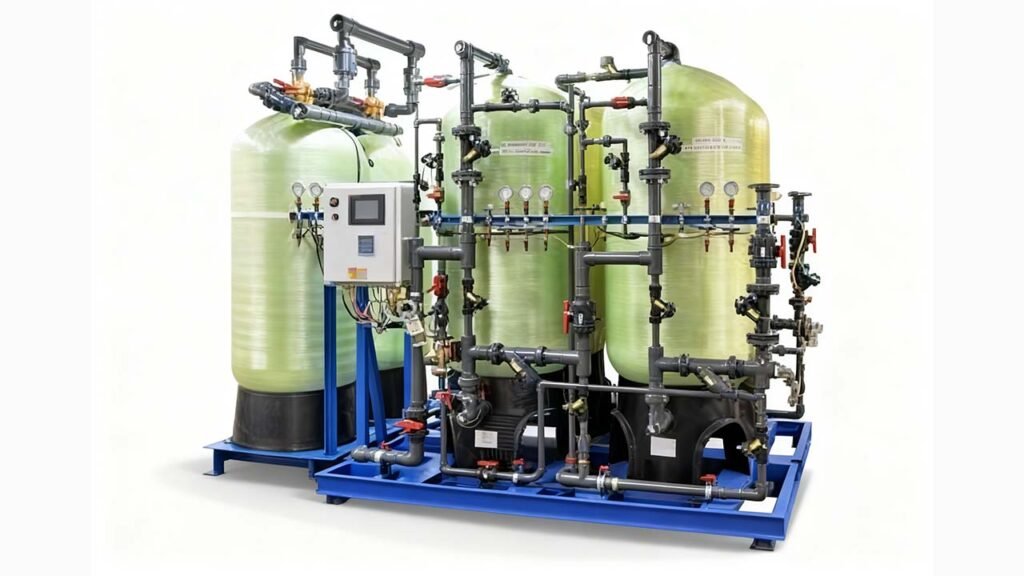
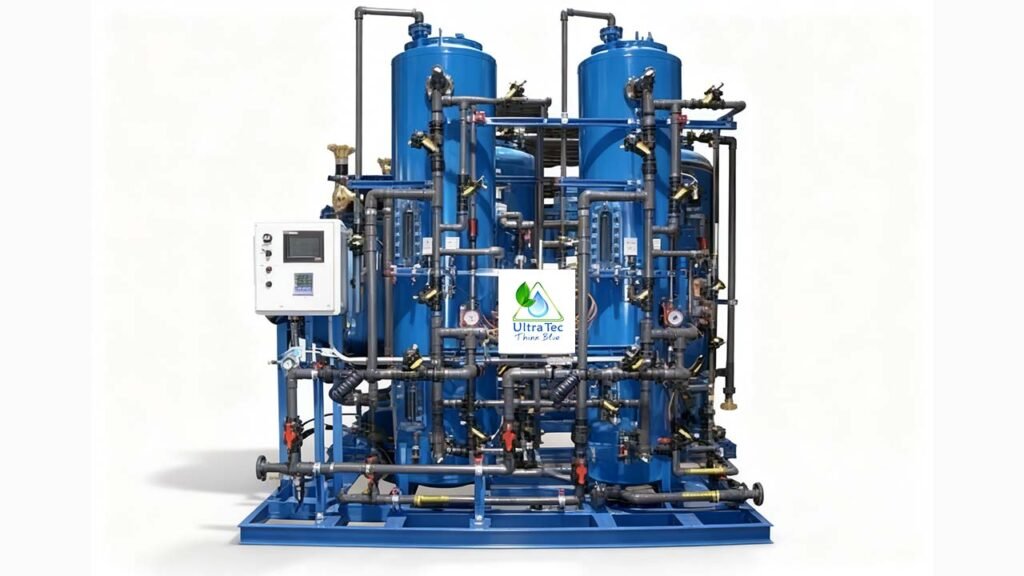
Industrial Separate Bed Deionizer
Industrial Separate Bed Deionizers are designed to remove dissolved ionic impurities from water using two separate ion exchange vessels — one containing cation exchange resin and the other containing anion exchange resin. These systems produce high-purity demineralized water required for industrial processes, laboratories, and specialized manufacturing applications.
During the ion exchange process, positive ions such as calcium and magnesium are exchanged with hydrogen ions in the cation resin, while negative ions such as chloride and sulfate are exchanged with hydroxide ions in the anion resin. When combined, hydrogen and hydroxide form pure water, significantly reducing total dissolved solids.
Separate bed deionizers are widely used in applications requiring reliable and consistent production of demineralized water.
Features
- Dual vessel ion exchange configuration
- High-efficiency cation and anion resin system
- Produces low conductivity demineralized water
- Designed for continuous industrial operation
- Durable pressure vessels and piping
- Easy regeneration and maintenance
- Suitable for high capacity water treatment systems
What the system is and what problem it solves?
Industrial water often contains dissolved salts and ionic impurities that can damage equipment, affect product quality, or interfere with sensitive industrial processes. Conventional filtration systems cannot remove these dissolved ions effectively.
Separate bed deionizers solve this problem by removing both positive and negative ions from water through ion exchange technology, producing high-purity demineralized water suitable for demanding industrial applications.
Process Design & Operating Philosophy
The system operates using two independent ion exchange vessels filled with specialized resins. Water first passes through the cation vessel where positive ions are removed, followed by the anion vessel where negative ions are removed.
This two-stage configuration ensures efficient ion removal and stable water quality for industrial processes.
The system includes:
- Multi-stage filtration cartridge
- Standard shower-arm compatible housing
- Flow-through design
- Replaceable filter element
- Simple connection for most shower setups
Configuration varies depending on the selected filter media.
Design Basis & Engineering Assumptions
| Parameter | Description |
|---|---|
|
Feedwater Source |
Pretreated water or RO permeate |
|
Treatment Method |
Ion exchange deionization |
|
Resin Type |
Cation and anion exchange resin |
|
System Configuration |
Separate bed dual vessel system |
|
Output Water Quality |
High purity deionized water |
|
System Capacity |
Configurable based on project requirements |
Final system configuration is determined after feedwater analysis and project design.
System Configuration
A typical Separate Bed Deionizer system may include:
Cation exchange vessel
Anion exchange vessel
Ion exchange resin media
Control valves and piping system
Flow monitoring instruments
Regeneration system (manual or automatic)
Performance Parameters
| Parameter | Description |
|---|---|
|
Water Purity |
Demineralized / deionized water |
|
Operation Mode |
Continuous or batch operation |
|
Ion Removal |
Dissolved ionic contaminants |
|
Monitoring |
Flow and conductivity monitoring |
Models
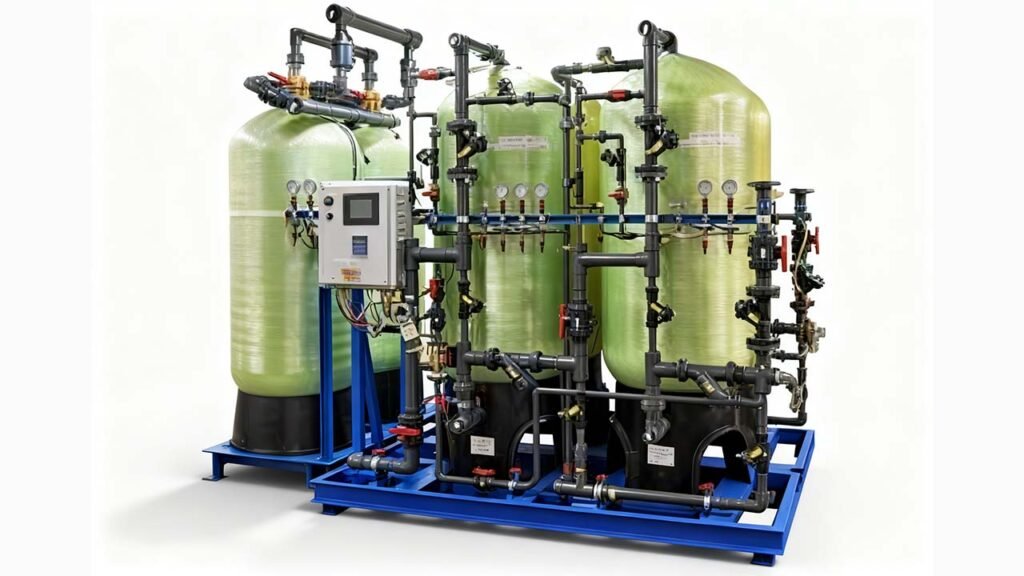
| System Type | Configuration | Typical Application |
|---|---|---|
|
Industrial Separate Bed DI |
Dual vessel ion exchange system |
Industrial water treatment |
|
High Capacity DI System |
Large scale separate bed system |
Manufacturing and process water |
|
Custom DI Plant |
Engineered configuration |
Project-specific applications |
Applications
- Industrial process water
- Laboratory water purification
- Pharmaceutical manufacturing
- Electronics manufacturing
- Boiler feed water treatment
Ideal For
- Industrial manufacturing plants
- Chemical processing facilities
- Laboratories and research centers
- Power generation facilities
Mixed Bed Deionizer
Mixed Bed Deionizers provide ultra-high purity water by combining cation and anion exchange resins within a single vessel. This configuration allows both types of ions to be removed simultaneously, producing extremely pure water for demanding applications.
Mixed bed deionizers are commonly used as a final polishing stage after reverse osmosis or other primary water treatment systems. They help achieve very low conductivity water required for industrial, laboratory, and high-precision manufacturing environments.
Features
- Mixed cation and anion resin bed configuration
- Produces ultra-high purity water
- High ion removal efficiency
- Compact and efficient system design
- Ideal polishing stage after RO systems
- Stable and reliable operation
What the system is and what problem it solves?
Even after advanced filtration or reverse osmosis treatment, trace ionic impurities may remain in the water. These ions can affect sensitive industrial processes, laboratory experiments, and high-precision manufacturing.
Mixed bed deionizers remove these remaining ionic contaminants, ensuring extremely pure water suitable for critical industrial and research applications.
Process Design & Operating Philosophy
Mixed bed systems combine both cation and anion exchange resins in a single vessel. As water flows through the mixed resin bed, ions are removed simultaneously through the ion exchange process, producing high-purity deionized water.
This configuration is particularly effective as the final polishing stage in high-purity water treatment systems.
Design Basis & Engineering Assumptions
| Parameter | Description |
|---|---|
|
Feedwater Source |
RO permeate or pretreated water |
|
Treatment Method |
Mixed bed ion exchange |
|
Resin Type |
Mixed cation and anion resin |
|
System Configuration |
Single vessel mixed bed system |
|
Output Water Quality |
Ultra-high purity deionized water |
|
System Capacity |
Designed according to project requirements |
Final system design is determined after feedwater analysis.
System Configuration
- Typical mixed bed systems include:
- Mixed bed pressure vessel
- Ion exchange resin mixture
- Control valves and piping
- Flow monitoring instruments
- Optional regeneration system
Models
| System Type | Configuration | Typical Application |
|---|---|---|
|
Mixed Bed DI |
Single vessel polishing system |
High purity water |
|
Industrial Mixed Bed System |
High capacity polishing unit |
Manufacturing |
|
Laboratory Mixed Bed Unit |
Laboratory Mixed Bed Unit |
Manufacturing |
Applications
- Semiconductor manufacturing
- Pharmaceutical production
- Laboratory water purification
- Electronics manufacturing
- Power plant water treatment
Ideal For
- Ultra-pure water production
- RO polishing systems
- High precision manufacturing
- Research laboratories
Lab / Aquarium Deionizer
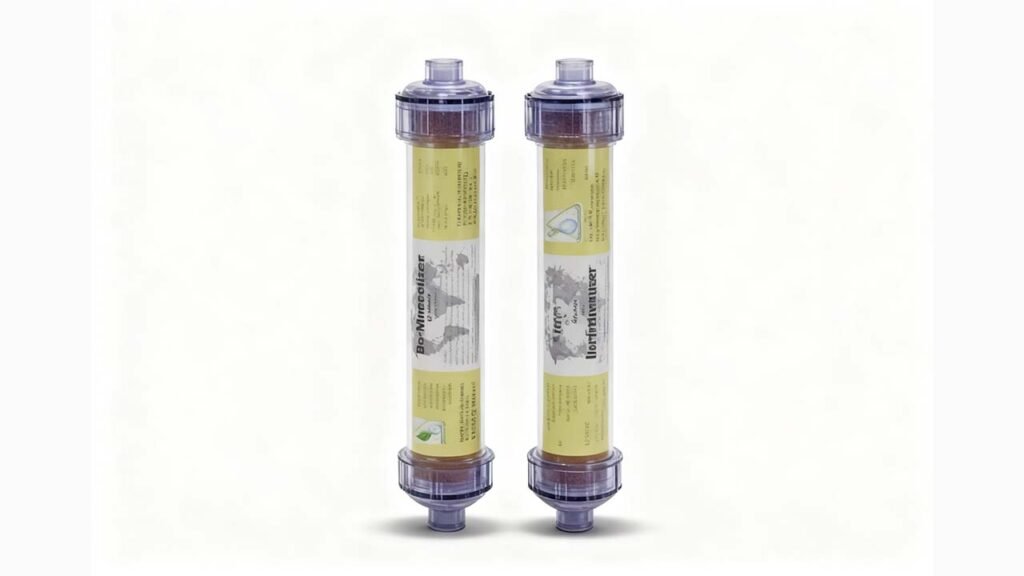
The Lab / Aquarium Deionizer is a compact deionization cartridge designed to remove remaining dissolved minerals and ionic impurities from water. It typically contains ion exchange resin that polishes water after reverse osmosis or filtration systems.
These units are commonly used in laboratories, aquariums, and small purification setups where very low mineral content water is required.
Features
- Compact cartridge design
- High quality ion exchange resin
- Reduces remaining dissolved minerals
- Easy installation and replacement
- Compatible with RO and filtration systems
- Suitable for small purification applications
Types
- DI Resin Cartridge — polishing cartridge for laboratories and aquariums
- Inline Deionizer Cartridge — installed after RO systems
What the system part is and what problem it solves?
Reverse osmosis systems remove most dissolved solids, but small amounts of ions may still remain in the water. The DI cartridge removes these remaining ionic impurities, ensuring very low TDS water for sensitive applications.
Applications
- Laboratory water purification
- Aquarium water treatment
- RO system polishing
- Small research setups
System Components
Certified Parts. Proven Performance.
We use certified components sourced from trusted global manufacturers to ensure system durability, operational stability, and regulatory compliance. From membranes and pumps to control panels and filtration media, every part is selected to support long-term performance and ease of maintenance.
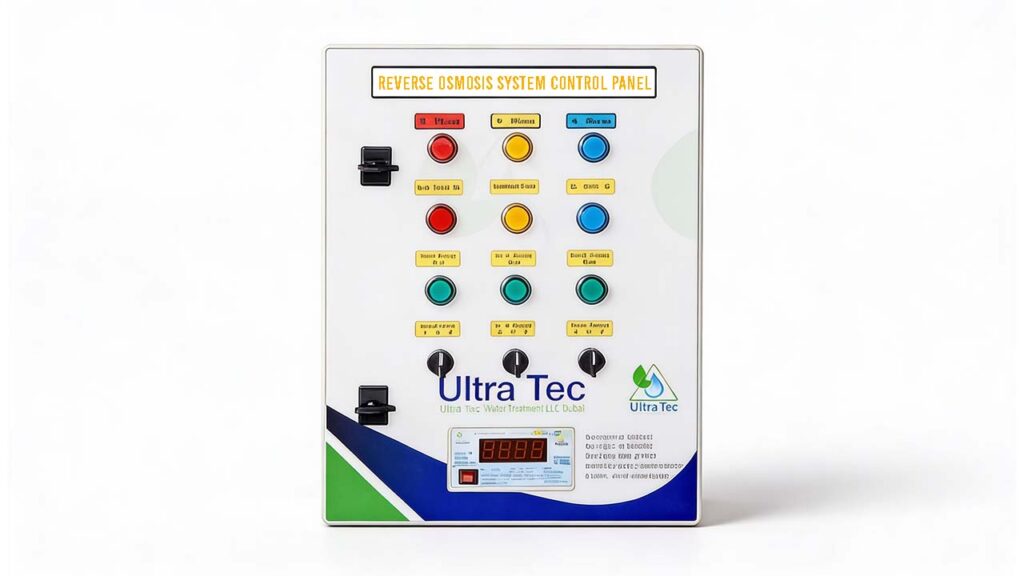
Industrial Automatic Control Panel
Industrial Automatic Control Panel helps you By reducing water consumption and minimizing wastage, you can lower your operational…
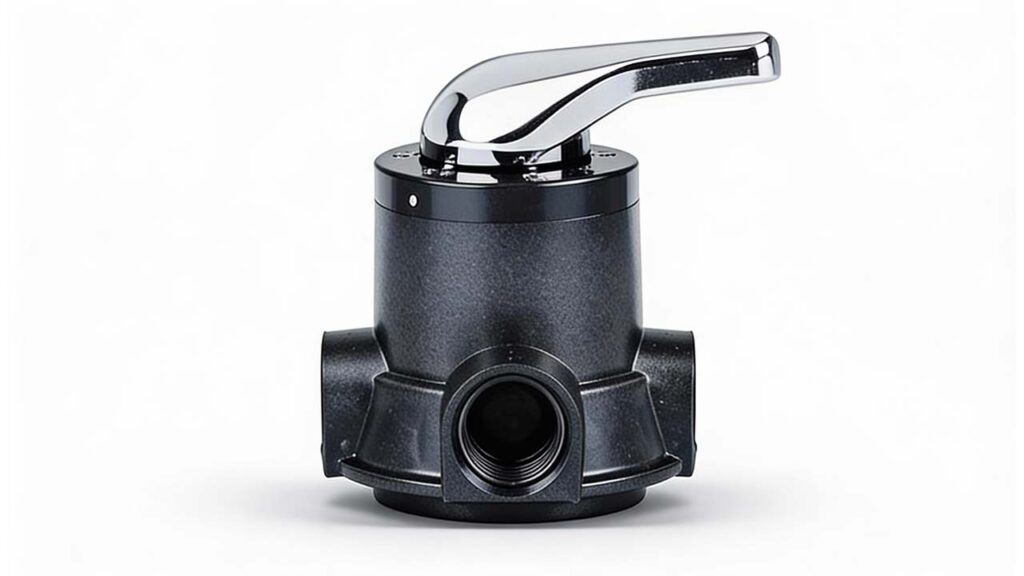
Control Valves
- Precise flow and pressure control
- Durable construction for industrial use
- Suitable for water treatment systems
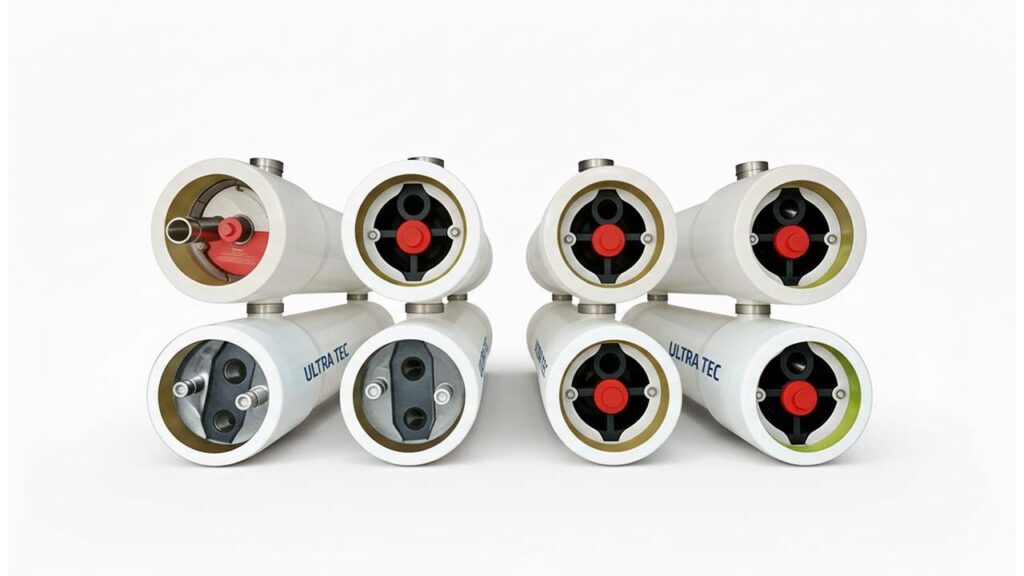
FRP Vessel RO Membrane Housing
- FRP construction, corrosion-resistant
- Fits standard RO membranes
- High-pressure capable
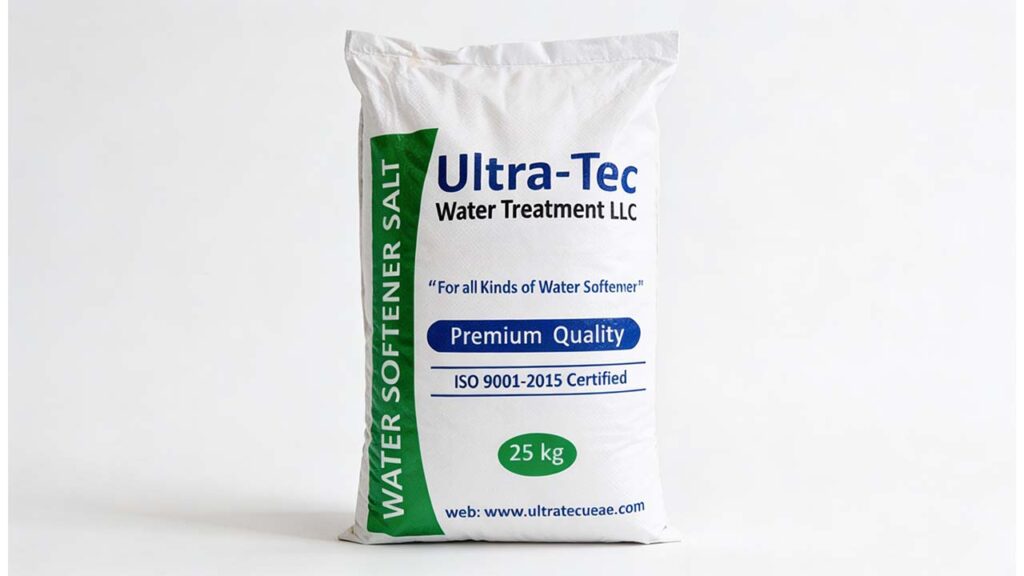
Water Softener Salt
Custom design and installation of RO plants that deliver high-purity water for industrial, commercial, and residential use.
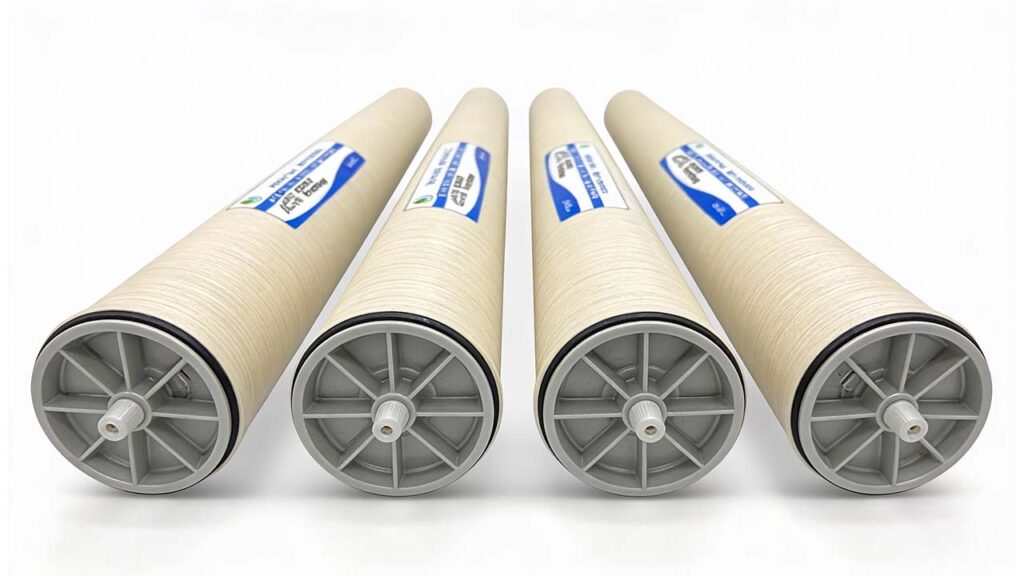
Ulltra Tec BW 4040 RO Membrane
The BW 4040 RO membrane is a thin film composite reverse osmosis membrane that has been designed for use in brackish water,…
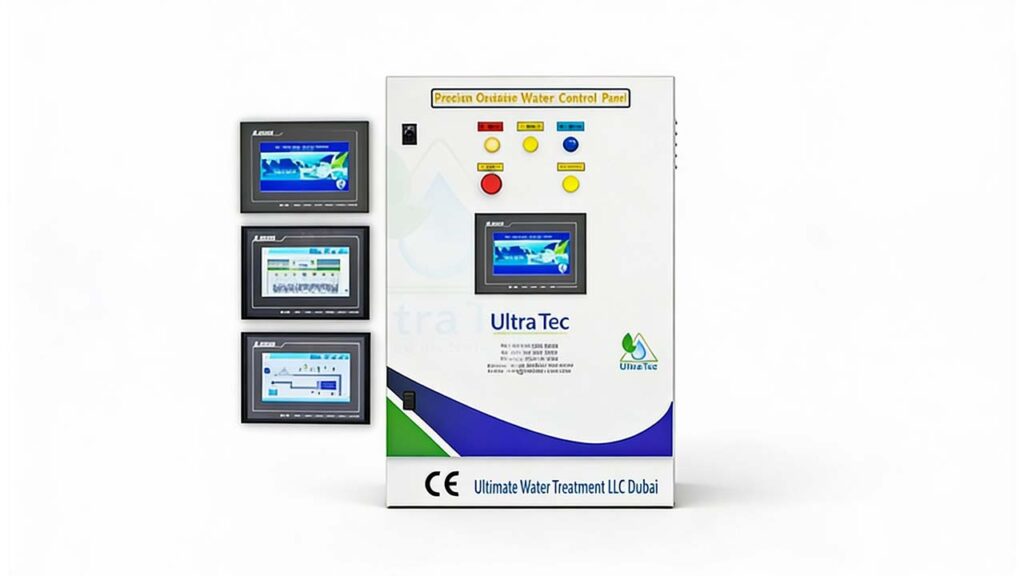
Industrial RO Control Panel
The Ultratec Water Treatment Company Uae Industrial RO Control Panel is essential to Ultratec Water Treatment Company’s…